
Storage rules
Use the resource locations, production recipes and base-building guide to decide what deserves permanent storage.
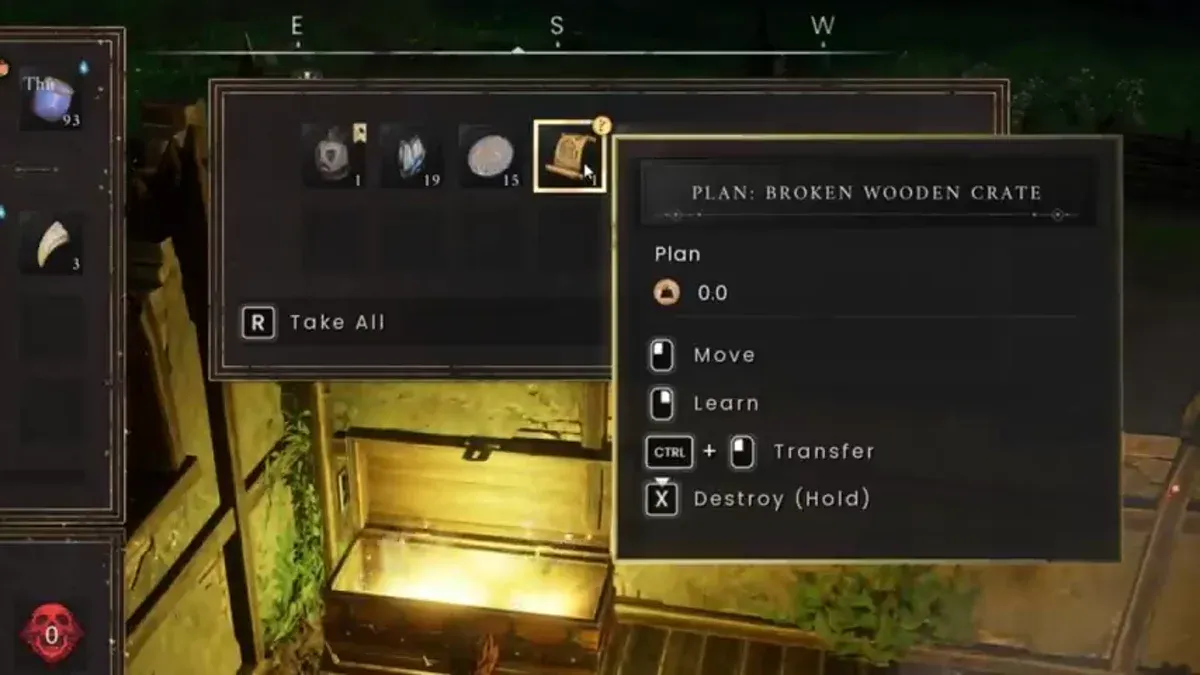
Use one chest for immediate production inputs, one for building materials and one for quest or rare items. Before a long run, leave enough slots for the expected return load. If an item appears missing, search the active inventory, nearby containers and the last station before assuming it was deleted. The completion signal is a shorter unload-and-process loop, not simply owning more containers.
What to do when storage or weight is the problem
| Problem | Immediate fix | Long-term fix |
|---|---|---|
| You are overencumbered on every route | Drop duplicate low-value materials and keep finished supplies instead of raw stacks | Move storage beside the stations that consume the materials |
| A station cannot see an ingredient | Put the input in nearby storage or carry one test unit to the station | Rebuild the workshop around short storage-to-station paths |
| You died with quest items | Stop farming replacements and confirm the journal objective and recovery location | Keep quest-critical items in a labelled, separate container until the step advances |
| You cannot decide what to keep | Keep the next quest input, station input and one repair/food reserve | Use the material table in the relevant resource article to check its recipe or progression use |
Weight is part of the route
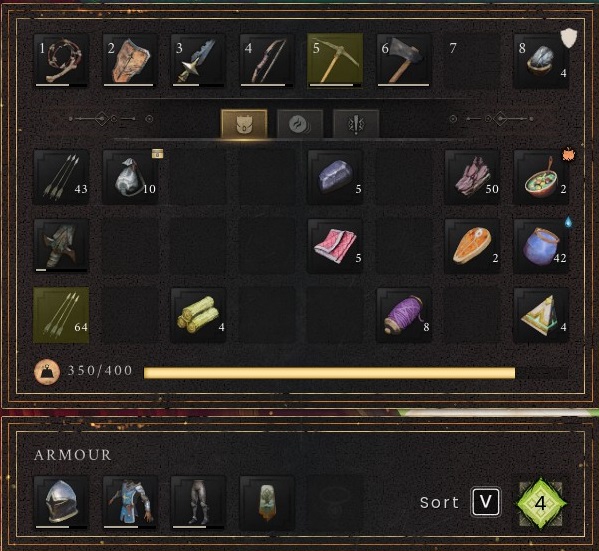
The standard carrying limit is 400, and Agility perks can raise it to 550. The total includes primary inventory, hot-bar and armour slots. Encumbrance removes running and jumping and slows movement, so plan a resource trip around the return weight, not only the number of empty slots.
Before leaving, reserve space for the target drop, keep quest items separate from bulk inputs, and return when the weight gauge approaches the limit. Store irreplaceable materials before a dangerous trip: primary-inventory items can be left in a gravestone on death, while equipped armour and some protected categories behave differently.
Use storage as a progression tool
Group storage by function rather than by the order in which items were collected: quest items, raw resources, processing inputs, finished food and water, combat supplies, and rare or unverified materials. Keep one visible “next task” container near the crafting stations. This reduces the chance of consuming a quest item or forgetting which intermediate has already been made.
The standard weight limit is 400, and encumbrance prevents running and jumping. Plan every route with the return weight in mind. Before a boss or region trip, move irreplaceable items out of the primary inventory and take only the supplies needed for the objective. After death, check the gravestone and protected categories before starting a recovery expedition.
Slot, weight and death rules you can plan around
The standard inventory has a 400-weight limit, with 8 hotbar slots, 5 armour slots, 24 primary inventory slots, a 24-slot rune pouch, a 24-slot quiver and 24 quest-item slots. Weight includes the primary inventory, hotbar and armour slots, so equipping an item does not remove its weight.
At 401/400 or more, the character is encumbered: running and jumping are disabled, movement is reduced to 60%, and automatic pickup stops. On death, primary-inventory items are dropped to the gravestone; equipped armour and shield, runes and key items are retained. Return to the gravestone before starting a second risky trip.
The local Personal Chest item record gives an early storage target: 16 Oak Logs, 3 Vault Cores and 99 Law Runes. Confirm the current journal before consuming Vault Cores because the raw wiki export contains duplicate and historical item records.
Your storage layout is working when
Your inventory plan is ready when it covers carrying, storage, stack splitting, repair, quest-item protection and recovery after death. Decide what you will carry, what stays at base and what can be safely replaced.