

Treat water as a shared production resource
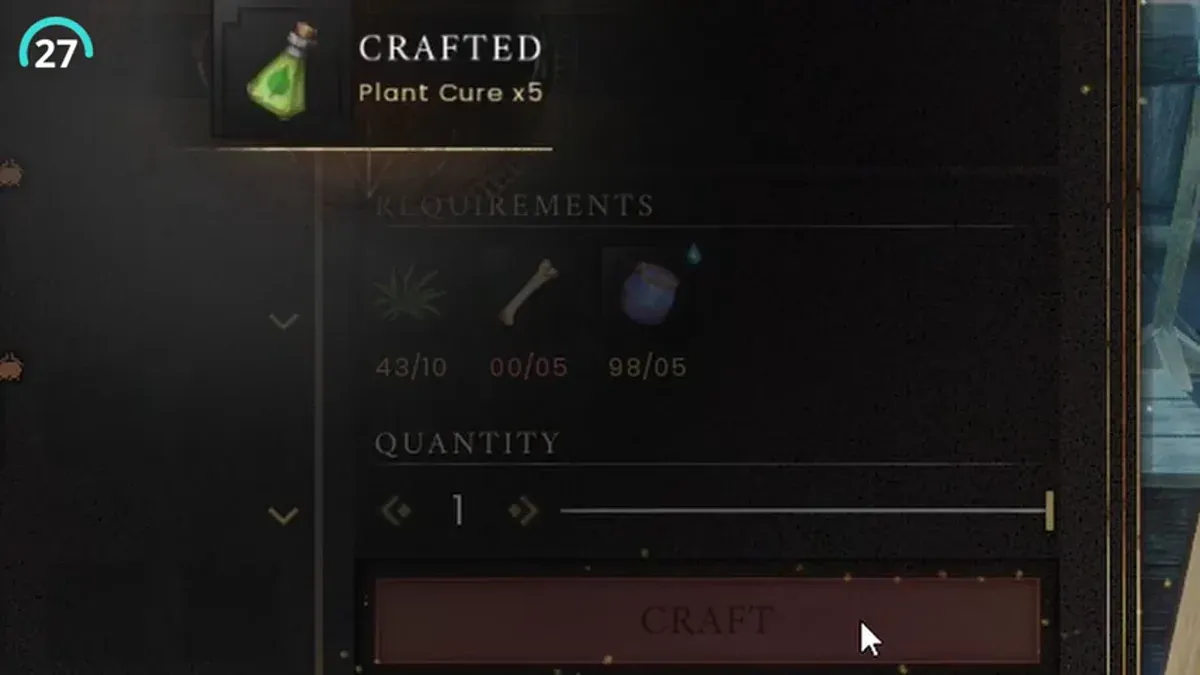
Water is consumed by survival, cooking, farming and recipes. Process a large batch of dirty water at a campfire while completing another task, then keep a reserve for both immediate hydration and the next farming cycle. The correct quantity depends on the current base and crop plan, so the practical check is whether the next watering run can be completed without returning to the water source.
Improve early farming experience deliberately
Use the crop action shown by the plot. For an efficient early loop, plant one crop, water it, harvest it, and compare the experience gain before filling every available plot.
Choose food by the problem it solves
Higher-tier food is not automatically more efficient. Some combined recipes provide less total sustenance than eating their ingredients separately, while others trade raw sustenance for a useful status effect. For routine travel, compare sustenance per ingredient and inventory space; for a dangerous area, choose the effect that addresses the actual threat.
Use fishing and farming together
 Fishing can supply food while
  Farming supplies repeatable crops and ingredients. For early Fishing experience, try net fishing in river spots between Temple Woods and Bramblemead Valley; the shorter net loop can be more efficient than a rod route when you are training rather than chasing a buff. Test one loop first and keep it only when the current spot, tool and experience display support it.
The completion signal is a repeatable preparation loop: the player can grow or gather the next consumable batch, understand which action advances the crop, and carry enough food, water and treatment items for the next objective.
A concrete early farming route
Start Farming through Growing Pains with the Wise Old Man around Bramblemead Valley. Use the plot and seed shown by the journal, keep a watering can and clean water available, and harvest when the plot reports that the crop is ready. Match the seed to the plot tooltip before planting a full stock.
| Farming question | Practical answer |
|---|---|
| How do I unlock Farming? | Complete Growing Pains with the Wise Old Man in Bramblemead Valley. |
| Which plot should I start with? | The Farming source lists Redberry, cabbage, potato, flax and wheat seeds with an Ash Farming Plot; confirm the current journal and plot tooltip before planting. |
| What tools matter first? | Keep a watering can and spade available; use clean water, the correct plot and the crop action shown by the plot. |
| How do I reduce downtime? | Build water collection/storage near the plots, fertilise when the crop plan benefits from it, and use sleep or another task while crops advance. |
Older recipes list Weak Healing Potion, Lesser Healing Potion and Healing Potion, but these are not the current farming targets. Follow the healing item shown by the journal instead of farming those historical ingredient lists.
Expedition supply check
Before leaving, make a small supply list: water, food, healing, the station or tool needed for the next step, and one reserve for an unexpected fight. Keep raw ingredients at base and carry finished items so a death or failed recipe does not remove the entire production chain. Test one food or potion effect, then label the storage container with its use. If you are missing a crop, fish, fuel or recipe unlock, solve that dependency before starting another gathering loop.
The food and farming loop is ready when
You are ready to leave when the journal identifies the current crop or consumable, the required station is available, water and ingredients are counted, and the result has been tested once. If an item is unavailable, first check whether it is a historical recipe or the journal has moved to a different tier before gathering more ingredients.
Related tasks: Herbs, fish and gathering materials, Leather, cloth and adhesive processing recipes, and Beginner guide and first progression steps.